In industries that rely on combustion processes, accurate gas analysis is crucial for both efficiency and compliance. Two primary tools used for gas analysis are emissions analyzers and combustion analyzers. While they may seem similar, these devices serve distinct purposes and have significant differences in their functionality. This post will explore the key differences between emissions analyzers and combustion analyzers, with insights into why high-quality emissions analyzers like the Testo 350 stand out as industry leaders.
What is a Combustion Analyzer?
A combustion analyzer is designed to measure the efficiency of a combustion process by analyzing gases such as oxygen (O2), carbon monoxide (CO), and sometimes nitric oxide (NO). These tools are typically used for tuning burners, boilers, and furnaces to optimize fuel efficiency and reduce pollutant emissions. However, combustion analyzers lack the precision and durability required for emissions monitoring. They are primarily used for spot-checking combustion conditions rather than providing long-term emissions data.
What is an Emissions Analyzer?
An emissions analyzer, on the other hand, is a more sophisticated instrument engineered to provide accurate and repeatable measurements of pollutants in exhaust gases. These analyzers are essential for regulatory compliance, environmental monitoring, and optimizing pollution control technologies. The Testo 350, one of the most widely used emissions analyzers in the world, is a prime example of a robust and reliable emissions analyzer used across industries, including by OEMs of thermal and pollution treatment systems.
Key Differences Between Emissions and Combustion Analyzers
Emissions analyzers have three key engineering advantages over combustion analyzers: Advanced Sample Gas Conditioning An emissions analyzer like the Testo 350 features an internal, purpose-engineered sample gas conditioner that brings the gas to a 4-degree dew point. This system minimizes analyte loss due to solubility and ensures more accurate measurements by reducing wetted areas that can absorb sample gases. Temperature Correction for Accuracy Portability in emissions analyzers requires built-in temperature correction curves to maintain accuracy under varying operational conditions. Without this feature, sensors can experience temperature-induced bias drift, leading to inaccurate readings. The Testo 350 compensates for these fluctuations, ensuring consistent results. Superior Pumping System for Reliable Sampling A consistent sample flow is crucial for accurate emissions testing. The Testo 350 features a sample pump that is five times more powerful than those found in standard combustion analyzers, with five different voltage levels to adapt to changing flow requirements. This capability ensures that samples are properly delivered to the analyzer regardless of the operational conditions of the thermal system being tested.
Why Choose the Testo 350 for Emissions Monitoring?
The Testo 350 emissions analyzer is widely trusted in industries that require precise emissions monitoring. Unlike combustion analyzers, which often require external sample gas conditioners to produce a dry basis reading (an additional cost factor), the Testo 350 is designed with built-in systems to ensure reliability and accuracy. Almost all turbine manufacturers and their field service organizations, rely on the Testo 350 for field service and guarantee emissions monitoring needs. Additionally, the Testo 350 is available in kit configurations for low-concentration sampling, making it ideal for turbine testing. With proper maintenance and servicing, this analyzer can remain in service for up to 15 years, making it an excellent ROI and a long-term investment in emissions compliance and operational efficiency.
Conclusion
While combustion analyzers serve an essential role in optimizing combustion efficiency, they fall short when it comes to precise emissions monitoring. Emissions analyzers like the Testo 350 are engineered with advanced gas conditioning, temperature correction, and superior pump performance to ensure reliable and accurate measurements. Investing in the right analyzer can make a significant difference in meeting regulatory requirements, improving efficiency, and reducing environmental impact. For those in need of emissions analysis solutions, Highmark Analytics can supply analyzer systems, calibration gases, and training to support quarterly monitoring in compliance with the D6522 requirement. Choosing the right analyzer is critical to ensuring accurate data, regulatory compliance, and long-term cost savings. Analyzers can be provided as new, refurbished or rental options.
Thanks to their outstanding performance in the peak load range, gas turbines have proven themselves as crucial and reliable components in numerous industrial applications. Gas turbines are used especially frequently in the electrical and heat generation sector, as well as in the oil and gas industry. In industrial energy production, gas turbines ensure that consumption peaks are covered and produce heat for buildings. Frequent areas of use are gas turbine works, combined heat and power (CHP) plants and cogeneration plants. A particularly high level of energy efficiency can be achieved using a combination of gas and steam turbines. In the oil and gas industry, gas turbines are in use as mechanical drives for pumps, compressors and generators in the transportation and processing of raw materials. Gas turbines are operated with liquid and gaseous fuels such as natural gas, gasoline, diesel, heating oil or petroleum. Optimizing the fuel- and exhaust gas-intensive process to the highest level of efficiency involves a complex interaction between the exhaust gas parameters and the combustion process settings of the gas turbine – the basis for an optimum performance. For a service technician, it is important to understand the function of the combustion process and the influence of the individual measurement parameters on the performance and pollutant emission of gas turbines.
Functional principle of gas turbines
Turbine
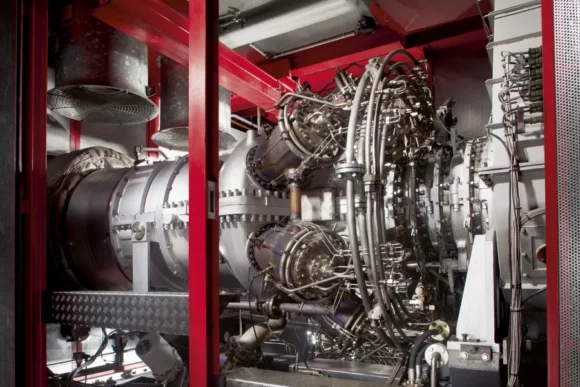
Gas turbines are combustion engines which consist of three components: a preliminary compressor the central combustion chamber and the actual turbine. The design, performance and size of gas turbines differ depending on the application and area of use. However, their working principle is always the same, and is based on the thermodynamic cycle process according to James Prescott Joule (“Joule process”). Air is compressed via the blading of one or more compressor steps, and then mixes with a gaseous or liquid fuel in the combustion chamber, ignites and combusts.
A hot gas is produced from this mixture of compressed air and combustion gas, which can reach temperatures of +1,000°C, and which escapes to the downstream turbine component, and expands. Thermal energy is converted into mechanical energy. Subsequently, in the expansion turbine, the energy-rich, hot exhaust gas expands almost to ambient pressure, losing its velocity. During the expansion process, the exhaust gas transfers power to the turbine. Approximately 2/3 of this power is needed to drive the compressor (air intake). A directly coupled generator converts the mechanical energy into electrical energy. Roughly ¹/₃ of the power output remains available on the low pressure side for a second drive, for example for driving a generator, rotor, compressor or pump, before the hot gas is diverted to a downstream heat recovery boiler for the purpose of heating buildings.
Analyzing exhaust gas concentrations correctly
The concentration of the released exhaust gases provides important information on the efficiency of the combustion and how it can be increased. CO and NOX values provide information on the current status of the system and the adherence to the emission limit values. The air input between rich and lean and the correlating combustion chamber temperature influence the emission behavior of the gas turbine.
Challenges in commissioning, operation and servicing
In emission measurements in gas turbines, the challenge is measuring not only at very high, but also at very low gas concentrations. At the right operating point, optimally adjusted gas turbines emit only low levels of CO and NOX. However, high gas concentrations can occur, for example when the plant is started up for testing purposes. The reduction of NO2 emissions as well as the avoidance of pressure loss in the combustion chamber are also important factors for the efficient operation of the gas turbine.
Nitrogen oxide (NOx) may sound like just a chemical compound, but the implications of how it is created and the health effects of the gas are important to understand as contributors to the industrial and chemical sectors of the market. In order to understand the importance of NOx gas, we will discuss its chemical composition, formulation process, its impacts and how to control NOx gas exhaust.
NOx formation explained
NOx gas is a chemical compound of nitrogen and oxygen that is distinguished by the specific way it is created. It is formed when nitrogen and oxygen react with each other during the combustion process, which occurs at high temperatures. The two chemicals do not react at room temperature, but when it is increased, NOx is formed. This mostly occurs when fossil fuel is combusted, especially oil, diesel and gas.
NOx is a common designation of nitrogen oxides NO and NO2, so either compound is covered here. Nitrogen oxide (NO) is colorless and has a very specific smell while nitrogen dioxide has a brown color and a similar sharp smell.
NOx gas is produced in any combustion process where nitrogen is present, mostly in vehicle engines, and its emissions can be dangerous at high volumes. Here, we will focus on the effects NOx gas created from diesel engines has on Australian air quality.
Impacts of NOx
The environmental impacts of NOx gas hurt air quality and can be extremely hazardous. According to the Australian Department of Agriculture, Water and Environment, air quality is one the most important factors affecting public health. It cites air pollution as a major contributor to health problems, even if there is only short-term exposure. Its website says that, “Children, the elderly and people with existing heart and lung conditions are especially affected by air pollution.”
Why are NOx gases dangerous to your health?
A NOx emission is a greenhouse gas in all three forms, N2O, NO2 and NO, all of which are produced by the combustion process. NO2 is a major component of photochemical smog that is a result of air pollution, which, as mentioned earlier, can severely damage human health. Exposure to air pollution causes about 5,000 deaths in Australia each year, according to Environmental Justice Australia. The side effects of NOx as an air pollutant include stroke, heart disease, and asthma. In a time where respiratory health is more important than ever, air pollution can pose an even larger threat to public health.
How does NOx gas impact the environment?
Aside from the health of its citizens, the planet suffers negative impacts from NOx emissions. As a greenhouse gas, these gases get trapped in the atmosphere and contribute to the “greenhouse effect,” in which the earth warms too quickly. NOx gases deplete the ozone layer, which protects the globe from the harmful radiation from the sun.
Industries that contribute to NOx emissions
While private individuals’ transportation certainly contributes to NOx air pollution, corporations and industrial processes are the most common emission sources. Some of the sectors are:
Electricity
Transport
Stationary energy
Agriculture
Fugitive emissions
Industrial processes
Waste and land use
Forestry
Chemical Industry (the production of nitric acid)
As leaders in any of these and related industries, you should be aware of your company’s contribution to NOx emissions. For example, the policy think tank group, Grattan Institute found that Australia’s industrial sector contributed 30% of the country’s greenhouse gas emissions in 2019. Much of the machinery used in the industrial sector relies on diesel fuel, one of the major creators of NOx pollution. As a result, government policies will most likely be put in place to control these effects and having the right measuring equipment can help you prepare for these legislative changes.
Efficient ways to measure NOx gases
Measuring exhaust gas is a requirement and the testing is done by different government agencies. Having the right tools to protect your workers and to measure the different emissions, including fuel NOx gases, is vital. Exhaust gas analysis for diesel and petrol engines is required for transportation and industrial machinery. The emissions results will inform the managers and leaders if they need to invest in more efficient equipment.
Nearly every industry uses gas analyzers of some kind, as fossil fuels are used in their combustion processes. The first step to reducing emissions is proper monitoring of different emissions, especially NOx. Most analyzers use infrared, chemiluminescence and electrochemical components to measure gas emissions.
Reducing NOx emissions can either be a requirement after receiving poor emissions results, or you could be striving to keep ahead of the developing legislation. There are several different ways to reduce gas emissions. Here are a few examples:
Lower peak temperatures
Spend less at peak temperatures
Reduce overall nitrogen
While burning fossil fuels may be an unavoidable process in most industrial applications, being more conscious of NOx emissions can help you reduce your carbon footprint, which requires top-of-the-line measuring tools.
Choose a Testo exhaust gas analysis system
Testo exhaust analyzer systems combine easy-to-use interfaces with complex and intricate technologies that produce reliable and traceable results. The testo 350, for example, is a tool that is used for industrial emissions measurement on industrial engines, burners, gas turbines and in thermal processes, including NOx gas.
Testo 350 is an easy-to-use exhaust gas analyzer that was created to complete precise industrial emission measurements and provide proper data administration, making it the ideal tool for staying on top of emissions.
Testo products always use the most comprehensive and effective technology in our measurement equipment, giving you the edge you need to stay on top of your emissions. Reach out to a Testo representative today to learn more about Testos’ reliable emission analyzers.