
Why Gas Sampling System Design Matters More Than the Analyzer

When facilities invest in emissions monitoring, combustion analysis, process control, or continuous emissions monitoring systems (CEMS), a great deal of attention is typically focused on the analyzer itself. However, one of the most common causes of inaccurate readings, excessive maintenance, and poor analyzer performance is not the analyzer—it is the gas sampling system.

A gas analyzer can only measure the sample it receives. If that sample is altered, contaminated, cooled, condensed, delayed, or otherwise unrepresentative of the process, the analyzer’s results become questionable regardless of how advanced the instrument may be.

The Purpose of a Gas Sampling System

A gas sampling system serves a critical role: delivering a representative sample from the process to the analyzer while preserving the sample’s composition and condition.
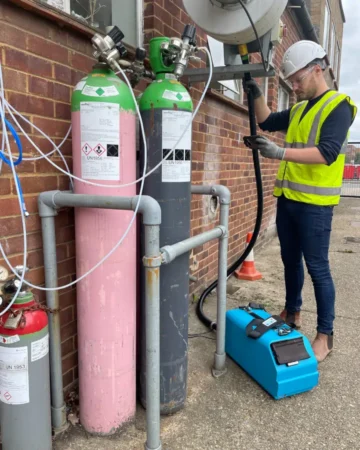
gas sampling

This often requires:

  • Temperature control to prevent condensation
  • Pressure regulation to protect instruments
  • Filtration to remove particulates
  • Moisture management
  • Flow control for consistent sample delivery
  • Fast-loop designs to reduce response time

Without these elements, measurement accuracy can quickly deteriorate.

Common Sampling System Challenges

Industrial processes often involve harsh conditions including high temperatures, moisture, corrosive gases, particulates, and fluctuating pressures. Poorly designed sample systems can create issues such as:

  • Long analyzer response times
  • Condensation within sample lines
  • Sample contamination
  • Component fouling
  • Increased maintenance requirements
  • Inaccurate process data

These challenges are especially common in combustion applications, emissions monitoring systems, power generation, manufacturing processes, and environmental compliance programs.Heated Sample Line Cross Section 1024x683.jpg
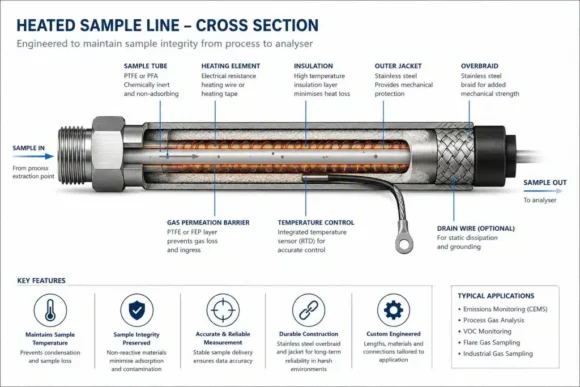
Key Design Considerations

1. Representative Sampling

The sample extraction point should accurately reflect the process stream. Poor probe placement or improper extraction methods can create biased results that do not represent actual operating conditions.

2. Temperature Management

Many gas streams contain moisture or compounds that can condense if temperatures fall below critical thresholds. Heated probes, heated lines, and proper insulation often play a vital role in preserving sample integrity.

3. Pressure Control

Analyzers typically require sample pressures that differ significantly from process pressures. Proper pressure regulation protects sensitive instrumentation while maintaining stable measurements.

4. Response Time

Slow response times can delay process decisions and obscure changing operating conditions. Minimizing dead volume and optimizing flow paths help ensure analyzers receive fresh, current samples.

5. Maintainability

A well-designed sampling system should simplify calibration, maintenance, troubleshooting, and component replacement. Easy access and modular designs can significantly reduce downtime and operating costs.

The Cost of Poor Sampling

Many facilities spend thousands of dollars troubleshooting analyzers when the root cause lies within the sampling system. Inaccurate measurements can lead to compliance risks, process inefficiencies, excessive fuel consumption, and unnecessary maintenance expenses.

Investing in proper sampling system design often provides a faster return on investment than upgrading analyzers alone.

Final Thoughts

Successful gas analysis starts long before the sample reaches the analyzer. A properly engineered sampling system protects sample integrity, improves reliability, reduces maintenance, and delivers the accurate data operators depend upon for critical decisions.

Whether you’re designing a new analyzer installation or troubleshooting an existing system, evaluating the sampling system should always be one of the first steps toward achieving dependable results.

Explaining NOx Gas

Nitrogen oxide (NOx) may sound like just a chemical compound, but the implications of how it is created and the health effects of the gas are important to understand as contributors to the industrial and chemical sectors of the market. In order to understand the importance of NOx gas, we will discuss its chemical composition, formulation process, its impacts and how to control NOx gas exhaust.

NOx formation explained

NOx gas is a chemical compound of nitrogen and oxygen that is distinguished by the specific way it is created. It is formed when nitrogen and oxygen react with each other during the combustion process, which occurs at high temperatures. The two chemicals do not react at room temperature, but when it is increased, NOx is formed. This mostly occurs when fossil fuel is combusted, especially oil, diesel and gas.

NOx is a common designation of nitrogen oxides NO and NO2, so either compound is covered here. Nitrogen oxide (NO) is colorless and has a very specific smell while nitrogen dioxide has a brown color and a similar sharp smell.

NOx gas is produced in any combustion process where nitrogen is present, mostly in vehicle engines, and its emissions can be dangerous at high volumes. Here, we will focus on the effects NOx gas created from diesel engines has on Australian air quality.

Impacts of NOx

The environmental impacts of NOx gas hurt air quality and can be extremely hazardous. According to the Australian Department of Agriculture, Water and Environment, air quality is one the most important factors affecting public health. It cites air pollution as a major contributor to health problems, even if there is only short-term exposure. Its website says that, “Children, the elderly and people with existing heart and lung conditions are especially affected by air pollution.”

Why are NOx gases dangerous to your health?

A NOx emission is a greenhouse gas in all three forms, N2O, NO2 and NO, all of which are produced by the combustion process. NO2 is a major component of photochemical smog that is a result of air pollution, which, as mentioned earlier, can severely damage human health. Exposure to air pollution causes about 5,000 deaths in Australia each year, according to Environmental Justice Australia. The side effects of NOx as an air pollutant include stroke, heart disease, and asthma. In a time where respiratory health is more important than ever, air pollution can pose an even larger threat to public health.

How does NOx gas impact the environment?

Aside from the health of its citizens, the planet suffers negative impacts from NOx emissions. As a greenhouse gas, these gases get trapped in the atmosphere and contribute to the “greenhouse effect,” in which the earth warms too quickly. NOx gases deplete the ozone layer, which protects the globe from the harmful radiation from the sun.

Industries that contribute to NOx emissions

While private individuals’ transportation certainly contributes to NOx air pollution, corporations and industrial processes are the most common emission sources. Some of the sectors are:

As leaders in any of these and related industries, you should be aware of your company’s contribution to NOx emissions. For example, the policy think tank group, Grattan Institute found that Australia’s industrial sector contributed 30% of the country’s greenhouse gas emissions in 2019. Much of the machinery used in the industrial sector relies on diesel fuel, one of the major creators of NOx pollution. As a result, government policies will most likely be put in place to control these effects and having the right measuring equipment can help you prepare for these legislative changes.

Efficient ways to measure NOx gases

Measuring exhaust gas is a requirement and the testing is done by different government agencies. Having the right tools to protect your workers and to measure the different emissions, including fuel NOx gases, is vital. Exhaust gas analysis for diesel and petrol engines is required for transportation and industrial machinery. The emissions results will inform the managers and leaders if they need to invest in more efficient equipment.

Nearly every industry uses gas analyzers of some kind, as fossil fuels are used in their combustion processes. The first step to reducing emissions is proper monitoring of different emissions, especially NOx. Most analyzers use infrared, chemiluminescence and electrochemical components to measure gas emissions.

Reducing NOx emissions can either be a requirement after receiving poor emissions results, or you could be striving to keep ahead of the developing legislation. There are several different ways to reduce gas emissions. Here are a few examples:

While burning fossil fuels may be an unavoidable process in most industrial applications, being more conscious of NOx emissions can help you reduce your carbon footprint, which requires top-of-the-line measuring tools.

Choose a Testo exhaust gas analysis system

Testo exhaust analyzer systems combine easy-to-use interfaces with complex and intricate technologies that produce reliable and traceable results. The testo 350, for example, is a tool that is used for industrial emissions measurement on industrial engines, burners, gas turbines and in thermal processes, including NOx gas.

Testo 350 is an easy-to-use exhaust gas analyzer that was created to complete precise industrial emission measurements and provide proper data administration, making it the ideal tool for staying on top of emissions.

Testo products always use the most comprehensive and effective technology in our measurement equipment, giving you the edge you need to stay on top of your emissions. Reach out to a Testo representative today to learn more about Testos’ reliable emission analyzers.

For More Information