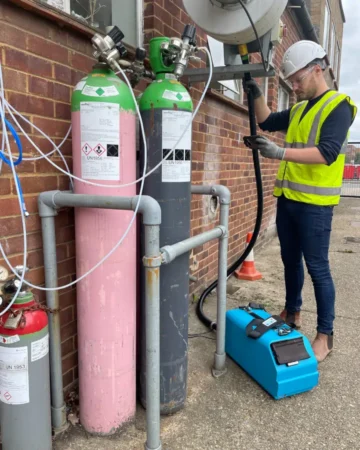
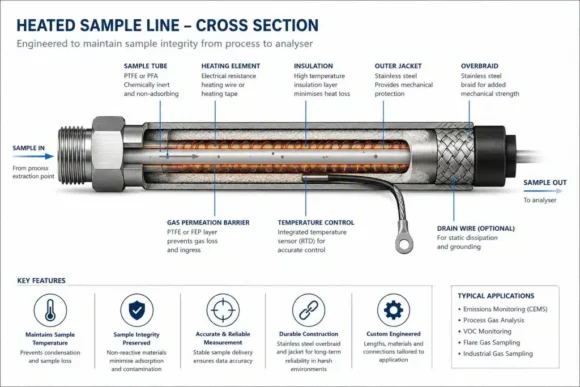
When facilities invest in emissions monitoring, combustion analysis, process control, or continuous emissions monitoring systems (CEMS), a great deal of attention is typically focused on the analyzer itself. However, one of the most common causes of inaccurate readings, excessive maintenance, and poor analyzer performance is not the analyzer—it is the gas sampling system.
A gas analyzer can only measure the sample it receives. If that sample is altered, contaminated, cooled, condensed, delayed, or otherwise unrepresentative of the process, the analyzer’s results become questionable regardless of how advanced the instrument may be.
The Purpose of a Gas Sampling System
A gas sampling system serves a critical role: delivering a representative sample from the process to the analyzer while preserving the sample’s composition and condition.

This often requires:
- Temperature control to prevent condensation
- Pressure regulation to protect instruments
- Filtration to remove particulates
- Moisture management
- Flow control for consistent sample delivery
- Fast-loop designs to reduce response time
Without these elements, measurement accuracy can quickly deteriorate.
Common Sampling System Challenges
Industrial processes often involve harsh conditions including high temperatures, moisture, corrosive gases, particulates, and fluctuating pressures. Poorly designed sample systems can create issues such as:
- Long analyzer response times
- Condensation within sample lines
- Sample contamination
- Component fouling
- Increased maintenance requirements
- Inaccurate process data
These challenges are especially common in combustion applications, emissions monitoring systems, power generation, manufacturing processes, and environmental compliance programs.
Key Design Considerations
1. Representative Sampling
The sample extraction point should accurately reflect the process stream. Poor probe placement or improper extraction methods can create biased results that do not represent actual operating conditions.
2. Temperature Management
Many gas streams contain moisture or compounds that can condense if temperatures fall below critical thresholds. Heated probes, heated lines, and proper insulation often play a vital role in preserving sample integrity.
3. Pressure Control
Analyzers typically require sample pressures that differ significantly from process pressures. Proper pressure regulation protects sensitive instrumentation while maintaining stable measurements.
4. Response Time
Slow response times can delay process decisions and obscure changing operating conditions. Minimizing dead volume and optimizing flow paths help ensure analyzers receive fresh, current samples.
5. Maintainability
A well-designed sampling system should simplify calibration, maintenance, troubleshooting, and component replacement. Easy access and modular designs can significantly reduce downtime and operating costs.
The Cost of Poor Sampling
Many facilities spend thousands of dollars troubleshooting analyzers when the root cause lies within the sampling system. Inaccurate measurements can lead to compliance risks, process inefficiencies, excessive fuel consumption, and unnecessary maintenance expenses.
Investing in proper sampling system design often provides a faster return on investment than upgrading analyzers alone.
Final Thoughts
Successful gas analysis starts long before the sample reaches the analyzer. A properly engineered sampling system protects sample integrity, improves reliability, reduces maintenance, and delivers the accurate data operators depend upon for critical decisions.
Whether you’re designing a new analyzer installation or troubleshooting an existing system, evaluating the sampling system should always be one of the first steps toward achieving dependable results.
In the world of industrial emissions management, the oversight of nitrogen oxides (NOx) has become an indispensable focus. The Environmental Protection Agency (EPA), recognizing the environmental and health implications of NOx emissions, has established comprehensive guidelines to regulate and mitigate these pollutants. Highmark Analytics, leveraging over two decades of experience as integrators and distributors of gas detection equipment, stands as a beacon in providing tailored solutions for monitoring NOx emissions and ensuring compliance with EPA standards.
Understanding the NOx Challenge
A fundamental comprehension of NOx emissions is crucial before delving into the nuances of EPA guidelines. NOx, comprising nitrogen dioxide (NO2) and nitric oxide (NO), predominantly arises from combustion processes within engines, turbines, burners, and other large machinery. Highmark Analytics, positioned as an industry leader, specializes in monitoring these emissions, offering precision tools to measure, analyze, and control NOx output.
Understanding the Genesis: How NOx Emissions Are Created
NOx emissions originate from the combustion of fossil fuels, a process intrinsic to various industrial activities. In engines, burners, turbines, and other large machinery, high temperatures and pressures facilitate the formation of nitrogen oxides. Specifically, nitrogen dioxide (NO2) and nitric oxide (NO) are the primary components of NOx emissions.
Combustion processes, such as those in power plants, vehicles, and manufacturing facilities, release nitrogen gases into the atmosphere. Atmospheric nitrogen reacts with oxygen under the influence of high temperatures, creating NOx pollutants. This chemical reaction, known as thermal NOx formation, significantly contributes to the overall NOx emissions.
Understanding the genesis of NOx emissions is pivotal for industries aiming to manage and reduce their environmental footprint through continuous emission monitoring systems. Highmark Analytics, recognizing the complexity of these processes, provides specialized tools to measure and monitor NOx emissions accurately, enabling businesses to take targeted actions for emission reduction.
Protecting Your Most Valuable Asset: Why Safeguarding Employees Matters
Beyond the regulatory aspects, there’s a human dimension to NOx emissions that cannot be overlooked. These emissions pose health risks to individuals exposed to them, particularly employees working in environments with high combustion activities. Nitrogen oxides can contribute to respiratory issues, aggravate existing conditions, and pose long-term health hazards.
Highmark Analytics underscores the importance of prioritizing employee well-being in emissions management. As integrators with a keen understanding of the industries we serve, we emphasize the need for comprehensive monitoring not just for regulatory compliance but also to create safer work environments.
Businesses can actively protect their workforce by investing in cutting-edge technologies, such as portable gas analyzers, emissions analyzers, combustion analyzers, and ambient air monitoring systems. Highmark Analytics’ commitment goes beyond mere compliance; it extends to ensuring that every facet of emissions management contributes to a workplace where employees are shielded from the adverse effects of NOx emissions.
Decoding EPA Standards: Highmark Analytics’ Commitment to Compliance
The EPA’s standards for NOx emissions are stringent, reflecting the urgency to address the adverse impacts on air quality and human health. Highmark Analytics, aware of these implications, aligns our product offerings and services to facilitate compliance for businesses navigating the complex landscape of environmental regulations. Our range includes portable gas analyzers, emissions analyzers, combustion analyzers, and ambient air monitoring systems – each tailored to meet the specific needs of industries bound by EPA standards.
Going Beyond Distribution: Highmark Analytics as Integrators
Highmark Analytics prides itself on transcending the traditional role of distributors. Beyond merely providing equipment, we position ourselves as integrators, guiding businesses to make informed decisions. We emphasize preventing unnecessary capital expenditures by ensuring clients make the right purchase the first time. With a noteworthy track record, having served over 50% of Fortune 500 companies, we have cultivated enduring relationships spanning 15-17 years.
Terminology Precision: A Crucial Distinction
In the intricate field of emissions monitoring, precision in terminology is not a minor detail but a critical distinction. Highmark Analytics clarifies its focus on instruments such as portable gas analyzers, emissions analyzers, combustion analyzers, and ambient air monitoring systems. The term “gas particle detector” doesn’t align with their specialization, which revolves around monitoring gases within engines, burners, turbines, and other vital components of large machinery.
Tailored Solutions Across Industries
Recognizing the diversity of industries grappling with NOx emissions, Highmark Analytics offers tailored solutions. Whether in manufacturing, energy production, or other sectors, our services cover sales, rentals, servicing, and consulting. This adaptability is essential for navigating the varied landscapes of emissions regulation that different industries face.
Infusing Humor into Professionalism: Highmark Analytics’ Unique Approach
Highmark Analytics injects a refreshing touch of humor into our professional approach in a sector often dominated by technical jargon and serious undertones. This unique blend sets us apart and makes the complex subject matter more approachable. Clients are reassured that, while the topic at hand is serious and compliance is non-negotiable, their journey with Highmark Analytics is informative and enjoyable.
Leveraging Two Decades of Industry Mastery
Experience is the bedrock of expertise, and Highmark Analytics stands firmly grounded with over two decades in the industry. The enduring relationships we’ve forged, lasting 15-17 years, speak volumes about our technological prowess and our commitment to being reliable, long-term partners. Opting for Highmark Analytics means gaining access to a reservoir of experience that can significantly impact your journey toward emissions compliance.
A Call to Forge a Lasting Partnership with Highmark Analytics
As the complexity of EPA guidelines for NOx emissions continues to grow, Highmark Analytics emerges as the guiding light to navigate this intricate landscape. More than distributors, we are committed partners invested in your success. Choosing Highmark Analytics is not merely a transaction; it’s a commitment to excellence, precision, and the assurance that your operations will meet and exceed EPA standards.
Navigating EPA Guidelines for NOx Emissions is a multifaceted challenge, best tackled with a knowledgeable and experienced guide. Highmark Analytics, with our commitment to accuracy, industry-specific terminology, and a touch of humor, stands as the definitive partner in this intricate journey. Trust us to guide you through the complexities, ensuring your operations meet and exceed EPA standards. Contact us today!