

Why Gas Sampling System Design Matters More Than the Analyzer
When facilities invest in emissions monitoring, combustion analysis, process control, or continuous emissions monitoring systems (CEMS), a great deal of attention is typically focused on the analyzer itself. However, one of the most common causes of inaccurate readings, excessive maintenance, and poor analyzer performance is not the analyzer—it is the gas sampling system.
A gas analyzer can only measure the sample it receives. If that sample is altered, contaminated, cooled, condensed, delayed, or otherwise unrepresentative of the process, the analyzer’s results become questionable regardless of how advanced the instrument may be.
The Purpose of a Gas Sampling System
A gas sampling system serves a critical role: delivering a representative sample from the process to the analyzer while preserving the sample’s composition and condition.
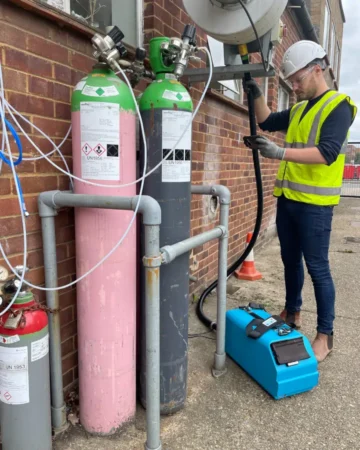
This often requires:
- Temperature control to prevent condensation
- Pressure regulation to protect instruments
- Filtration to remove particulates
- Moisture management
- Flow control for consistent sample delivery
- Fast-loop designs to reduce response time
Without these elements, measurement accuracy can quickly deteriorate.
Common Sampling System Challenges
Industrial processes often involve harsh conditions including high temperatures, moisture, corrosive gases, particulates, and fluctuating pressures. Poorly designed sample systems can create issues such as:
- Long analyzer response times
- Condensation within sample lines
- Sample contamination
- Component fouling
- Increased maintenance requirements
- Inaccurate process data
These challenges are especially common in combustion applications, emissions monitoring systems, power generation, manufacturing processes, and environmental compliance programs.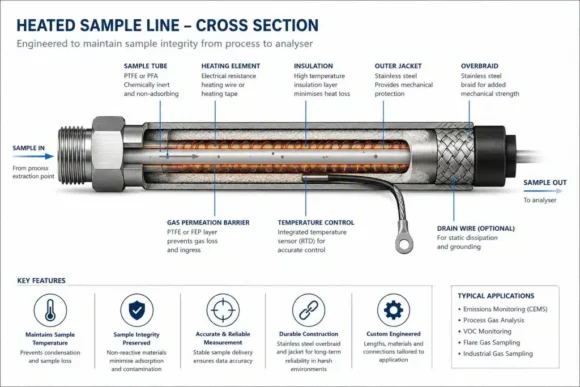
Key Design Considerations
1. Representative Sampling
The sample extraction point should accurately reflect the process stream. Poor probe placement or improper extraction methods can create biased results that do not represent actual operating conditions.
2. Temperature Management
Many gas streams contain moisture or compounds that can condense if temperatures fall below critical thresholds. Heated probes, heated lines, and proper insulation often play a vital role in preserving sample integrity.
3. Pressure Control
Analyzers typically require sample pressures that differ significantly from process pressures. Proper pressure regulation protects sensitive instrumentation while maintaining stable measurements.
4. Response Time
Slow response times can delay process decisions and obscure changing operating conditions. Minimizing dead volume and optimizing flow paths help ensure analyzers receive fresh, current samples.
5. Maintainability
A well-designed sampling system should simplify calibration, maintenance, troubleshooting, and component replacement. Easy access and modular designs can significantly reduce downtime and operating costs.
The Cost of Poor Sampling
Many facilities spend thousands of dollars troubleshooting analyzers when the root cause lies within the sampling system. Inaccurate measurements can lead to compliance risks, process inefficiencies, excessive fuel consumption, and unnecessary maintenance expenses.
Investing in proper sampling system design often provides a faster return on investment than upgrading analyzers alone.
Final Thoughts
Successful gas analysis starts long before the sample reaches the analyzer. A properly engineered sampling system protects sample integrity, improves reliability, reduces maintenance, and delivers the accurate data operators depend upon for critical decisions.
Whether you’re designing a new analyzer installation or troubleshooting an existing system, evaluating the sampling system should always be one of the first steps toward achieving dependable results.